
A padlock that's too thick won't go through the hasp, and one with too little clearance won't close around it. Here's how to choose a padlock for a gym, school or work locker that fits first time – and that you can open in a hurry after a workout.
Measure the locker before you buy
Locker hasps vary between gyms, schools and changing rooms, so check yours rather than guessing. You need two measurements:
- The hole in the hasp. This is where the shackle goes through. The shackle's diameter must be smaller than the hole, ideally with a millimetre or two to spare.
- The thickness of the hasp and door. The shackle has to reach through the hole and close again, so the space inside it must be taller and wider than the metal it wraps around.
If you can't measure the locker yet, take a photo of the hasp next to a ruler, or ask the gym whether it recommends a particular size.
Shackle diameter: thicker is stronger, if it fits
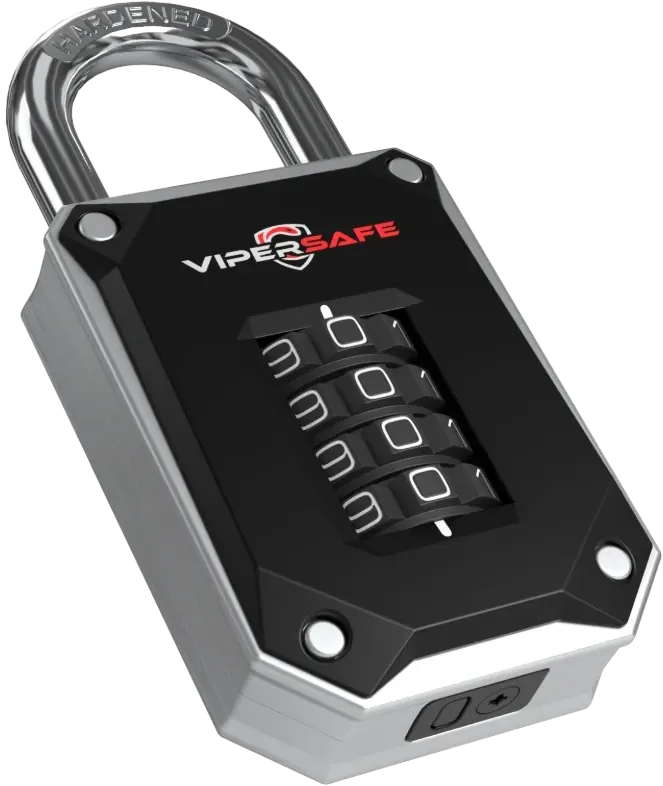
A thicker shackle resists cutting and levering better, but only if it fits through the hole. The ViperSafe VS60 has a 7 mm hardened steel shackle, which fits many locker hasps and also works on sheds, gates and toolboxes.
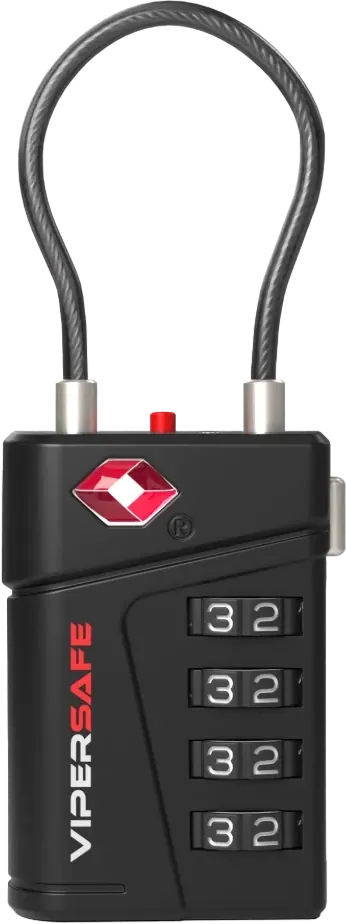
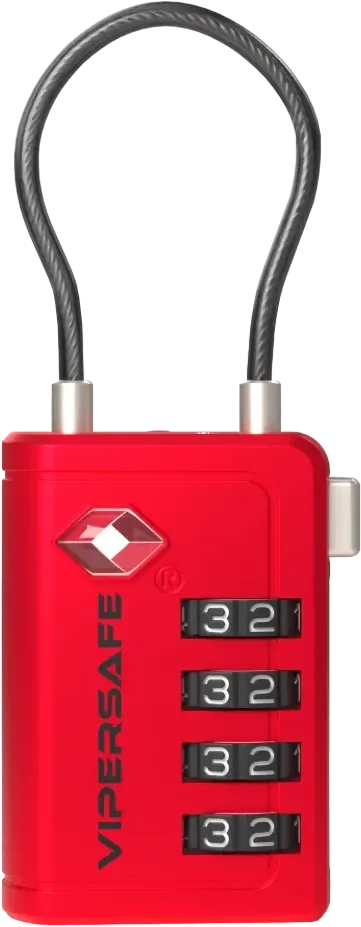
For very small hasps, a cable lock is the answer. The VS51 has a flexible braided steel cable that fits openings wider than 4 mm, so it threads through narrow loops that a rigid shackle can't.
Shackle clearance: the measurement people forget
Clearance is the space inside the shackle when the padlock is closed – its height and width. It decides how much metal the padlock can wrap around. The VS60's shackle clearance is 22.9 × 22 mm (H × W), with a 62 × 45 × 20 mm body. Compare that with your hasp: if the hasp and door are thicker than the clearance, the padlock won't close.
Combination or key?
At the gym, a combination padlock is hard to beat:
- Nothing to carry. No key to lose in the pool, leave in another jacket or drop in the changing room.
- Easy to share. A training partner or family member can use the same locker without a spare key.
- Quick to change. If someone sees your code, you can set a new one in a couple of minutes.
4 digits or 3?
A 4-digit padlock has 10,000 possible codes (0000 to 9999) – ten times as many as the 1,000 codes of a 3-digit lock. The VS60 has four large, high-contrast dials that are easy to read in a dim changing room.
Setting a code you'll remember
- Set your own code before your first visit – never keep the factory code.
- Avoid 0000, 1234, your date of birth and your bank card PIN.
- Test the new code several times before you lock anything away.
Our guide on how to reset a combination lock walks you through it step by step.
Which ViperSafe lock for your locker?
- For most gym, school and work lockers: the VS60 heavy-duty combination padlock, with a 7 mm hardened steel shackle, a 4-digit code and a weatherproof finish. Choose Silver, Grey, Green or Red, single or double pack – different colours make it easy to tell family members' locks apart.
- For small hasps and bags: the VS51 cable lock, with a flexible braided steel cable that fits openings wider than 4 mm. It doubles as a TSA-accepted luggage lock for your next trip.
Both carry a five-year ViperSafe warranty. See all gym and locker locks.